
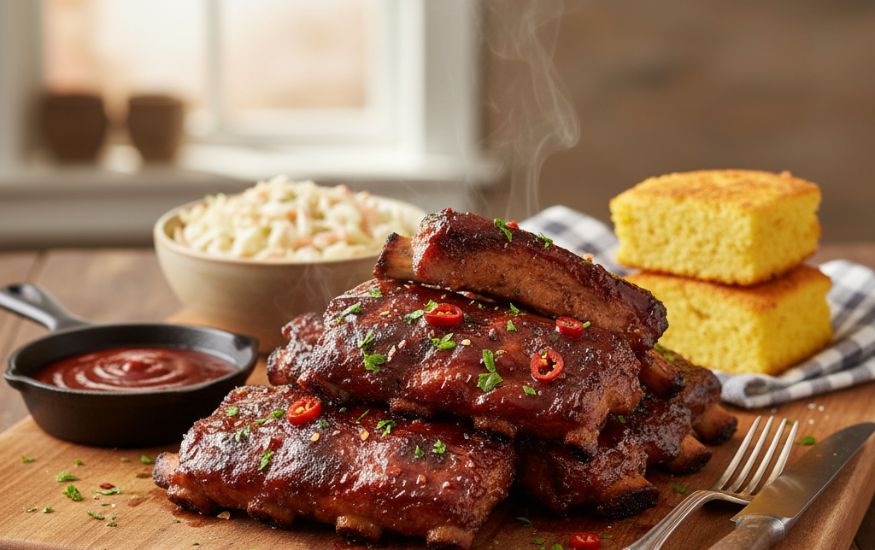
Let’s talk about how to cook country style ribs without turning it into a whole stressful situation. These ribs confuse people way more than they should. They are not baby back ribs. They are not spare ribs.
They are thick, meaty, and honestly closer to a juicy pork chop that just wants attention. You see them at the store, they look good, the price makes sense, and then you get home and think okay now what. Oven or grill. Sauce or no sauce. Covered or uncovered. That’s exactly where this gets fun, because once you understand how country style pork ribs actually behave, cooking them becomes stupidly simple and way more forgiving than people think.
How to Cook Country Style Ribs Without Overthinking It
Here’s the straight-up truth. Country style ribs in the oven are the easiest win if you want tender meat without babysitting a grill. These ribs love slow heat. They hate being rushed. You season them well—nothing fancy, just salt, pepper, garlic, maybe paprika—lay them in a baking dish, cover them tight, and let them cook low and slow until the meat basically relaxes and gives up. That’s when you uncover, add barbecue sauce, and let them finish uncovered so the outside gets sticky and slightly caramelized.
Same logic works for boneless country style ribs too; they just cook a bit faster. If you’re grilling, the move is indirect heat first, then a quick finish over the flames. The goal is always the same: tender inside, saucy outside, no dry sad pork. It’s the same mindset that makes comfort foods like Brooklyn Style Pizza so good—simple ingredients, patience, and letting the process do the work. Once you stop treating these like traditional ribs and start cooking them like thick pork cuts that need time, everything clicks, and suddenly easy country style ribs don’t feel like a mystery anymore.
Best Ways to Cook Country Style Ribs Without Drying Them Out
This is where people usually mess up, not because it’s hard, but because they rush it or overthink it. How to cook country style ribs really comes down to choosing the method that matches your mood and how much effort you feel like giving. These ribs are flexible like that. They adapt. You just have to stop blasting them with heat and expecting magic.
Oven Method That Never Fails Cook Country Style Ribs
If someone says they ruined country style ribs in the oven, chances are they cooked them too hot or skipped the cover part. The oven is low effort and high reward when done right.
- Bake low and slow so the meat softens instead of tightening up
- Keep them covered first so moisture stays locked in
- Finish uncovered with BBQ country style ribs sauce so they get that sticky edge
- Let them rest before serving because yes resting matters more than you think
This method works especially well for boneless country style pork ribs because they soak up flavor fast and stay juicy without much drama.
Grilling Them Without Turning Them Into Jerky
Grilling sounds fun until the ribs come out dry and everyone pretends they like them. The trick with grilled country style ribs is indirect heat. Always.
- Start them away from direct flame so they cook through gently
- Flip occasionally, not obsessively
- Sauce goes on near the end, not early, unless you enjoy burnt sugar
- Finish with a quick char just for texture, not for survival mode
This gives you that smoky flavor without sacrificing tenderness, which is the whole point.
Slow Cooker When You Want Zero Effort
For days when standing near heat feels illegal, slow cooker country style ribs exist and they do not disappoint.
- Season generously because slow cooking mellows flavors
- Add a splash of broth or sauce to keep things juicy
- Cook low for hours until the meat pulls apart easily
- Sauce at the end and broil briefly if you want a sticky finish
This method is basically autopilot cooking and somehow still delivers tender, fall apart ribs every single time.
Once you understand that country style pork ribs just want time, moisture, and a little respect, every cooking method starts making sense. It’s not about fancy tricks. It’s about letting the meat do its thing while you stay out of its way.
The Bottom Line
So yeah, how to cook country style ribs is really not the serious life decision people turn it into. These ribs are thick, hearty, and honestly kind of chill if you treat them right. They don’t want high heat chaos. They want time. They want to sit there slowly getting tender while you mind your business. Oven, grill, slow cooker, whatever you pick, the rule stays the same. Slow down, don’t drown them too early in sauce, and stop poking them every five minutes. When country style pork ribs are cooked patiently, they come out juicy, soft, and full of flavor without you having to fight them. Once you get that, making them stops feeling intimidating and starts feeling like an easy win you’ll keep repeating.
Frequently Asked Questions
Q: Why do my country style ribs come out dry every time
Answer: Because they were rushed. That’s it. Country style ribs dry out when they’re cooked hot and fast like they’re in a race. Lower the heat, give them time, and they’ll calm down and turn tender instead of tough.
Q: Is the oven actually better than the grill
Answer: For consistency, yes. Country style ribs in the oven are way harder to mess up because the heat is steady and controlled. Grilling is great too, it just needs more attention and indirect heat or things go sideways fast.
Q: Do I really need to cover them while cooking
Answer: In the beginning, absolutely. Covering traps moisture and helps the meat soften. Once they’re tender, uncover them so the outside can get sticky and a little caramelized. That combo is what makes them good.
Q: When should I put barbecue sauce on
Answer: Near the end. Always near the end. Putting BBQ sauce on country style ribs too early usually means burnt sugar and regret. Let the ribs cook first, then sauce them up for the final stretch.
Q: Can I make country style ribs without sauce at all
Answer: Yep. A solid dry rub works perfectly. Country style pork ribs have enough meat and flavor on their own. Sauce is a vibe, not a requirement.