Before my recent travels through Europe and North America, one of the most common questions I had was: What is the drinking age in France and Canada?
As someone who loves exploring local culture through food and social experiences, I wanted to understand how both countries approach alcohol laws, not just legally, but culturally too.
User Query, Problem, and Intent
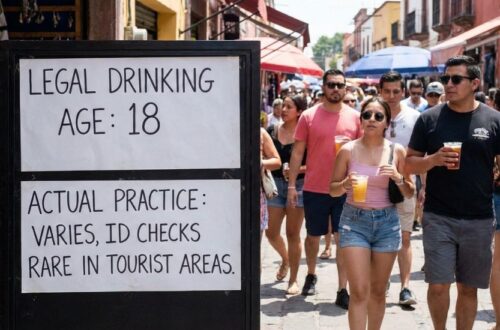
Whether you’re a traveler, exchange student, or someone planning a trip, knowing the legal drinking age in France and Canada is essential. Alcohol rules vary widely around the world, and misunderstanding them could get you in trouble. Before visiting, I wanted to make sure I could enjoy a glass of wine or beer responsibly while staying compliant with local laws. If you’re also curious about alcohol laws in other countries, here’s a helpful guide on the drinking age in Mexico
Promise You’ll Get Clear, Firsthand Information
In this article, I’ll break down everything I learned about the drinking age laws in France and Canada, share cultural insights from my experience, and explain how enforcement differs in each country. By the end, you’ll know exactly what’s allowed, what’s not, and how to enjoy your travels responsibly.
France Legal Drinking Age and Culture
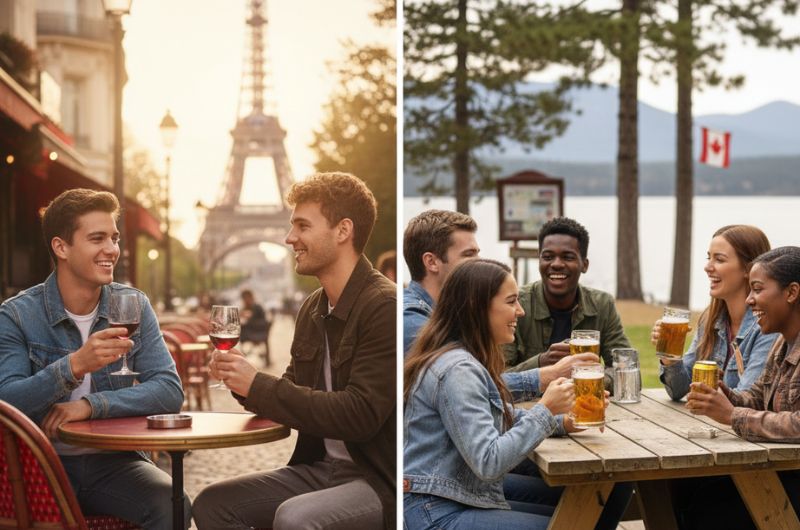
During my visit to Paris and Lyon, I discovered that the legal drinking age in France is 18 years old. This applies to both purchasing and consuming alcoholic beverages, including wine, beer, and spirits. However, France has an interesting relationship with alcohol, especially wine. Drinking is not viewed as a form of rebellion or excess but rather as an everyday part of culture and cuisine.
You’ll often see families enjoying a glass of wine together during dinner, even in restaurants. In many cafes and bars, ID checks aren’t overly strict unless you visibly appear underage. The French approach to alcohol focuses more on education, moderation, and respect rather than strict restriction. Fun fact: Before 2009, 16-year-olds in France were legally allowed to drink wine and beer. However, the law was changed to 18 to align with European standards and promote healthier habits among young people.
Canada Legal Drinking Age and Enforcement
When I traveled to Canada, things were more complex. The legal drinking age in Canada isn’t uniform; it depends on the province or territory you’re in.
Here’s a quick breakdown:
Province/Territory Legal Drinking Age
Alberta 18
Manitoba 18
Quebec 18
Ontario 19
British Columbia 19
Nova Scotia 19
New Brunswick 19
Newfoundland and Labrador 19
Saskatchewan 19
Northwest Territories 19
Yukon 19
Nunavut 19
So, if you’re in Quebec, you can legally enjoy a drink at 18, but if you cross over to Ontario, you’ll have to wait until you’re 19. Canadian authorities take ID checks very seriously, especially in bars, liquor stores, and restaurants. During my stay in Toronto, bartenders and cashiers always requested valid identification, even for tourists. Canada’s alcohol policies emphasize responsibility, safety, and moderation.
Cultural Comparison Between France and Canada
While both France and Canada share a relaxed attitude toward alcohol, their cultural approaches differ:
Aspect France Canada
Legal Drinking Age: 18 nationwide, 18–19 depending on province
Cultural Attitude Integrated into meals, part of daily life, Social and occasional drinking
Enforcement: Moderate Strict ID checks
Popular Drinks: Wine, Champagne, Cognac, Beer, Whisky, Wine
Public Consumption is Common in social areas, restricted in public places
In France, alcohol is considered part of culture and identity, often linked to fine dining and social grace. In Canada, it’s viewed more as a leisure or social activity, and laws are stricter to promote safety and prevent underage drinking.
Pros and Cons of Alcohol Laws in France and Canada
France Pros:
- Encourages responsible drinking through culture and education
- Affordable and high-quality wine is widely available
- Relaxed environment, even in social settings
France Cons:
- Minimal enforcement can lead to underage drinking in rural areas
- Alcohol consumption is common, which may pressure young adults socially
Canada Pros:
- Strict ID enforcement reduces underage drinking
- Alcohol regulation ensures safety and quality
- Balanced public awareness campaigns
Canada Cons:
- Provincial age differences can confuse travelers
- Alcohol is relatively expensive in most provinces
My Personal Experience
In France, I enjoyed how naturally wine fit into everyday meals; it never felt excessive or out of place. Conversations over a shared bottle of Bordeaux were part of the charm. In Canada, I appreciated the sense of safety and organization. Even though regulations were tighter, the experience was just as enjoyable, especially in craft beer bars in Vancouver and Toronto. Both countries offer unique drinking cultures, one shaped by history and tradition, the other by safety and modern awareness.
Conclusion
To sum it up, the legal drinking age in France is 18, while in Canada it ranges from 18 to 19 depending on the province. France promotes a cultural, moderate approach to alcohol, while Canada enforces its laws more strictly to maintain public safety. No matter where you are, responsible drinking remains the key. Whether you’re sipping fine wine by the Seine or sharing a craft beer in Toronto, respecting local laws ensures a safe and memorable experience.