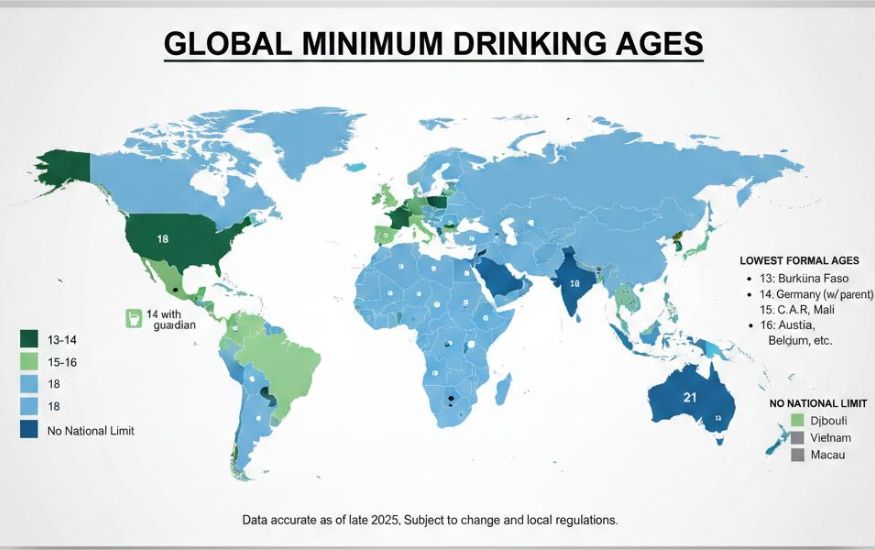
If you’ve ever compared alcohol laws around the world, you may have wondered, where is the youngest drinking age in the world?
There isn’t one simple answer because countries don’t all regulate alcohol in the same way. Some laws set an age for buying alcohol, others set an age for being served in a bar or restaurant, and some make a distinction between beer, wine, and spirits.
That is why a country can appear to have a very low drinking age while having a higher age for buying or ordering certain alcoholic drinks.
What Does “Youngest Drinking Age” Actually Mean?
Before comparing countries, it’s important to understand what the age refers to.
A legal age can apply to:
- buying alcohol from a shop
- being served alcohol at a restaurant or bar
- drinking alcohol in public
- consuming alcohol in a private setting
- possessing certain types of alcohol
The World Health Organization treats these as separate measures when collecting information about alcohol laws.
So when someone searches for the youngest drinking age in the world, the answer depends on which part of the law they mean.
Is 14 the Youngest Drinking Age?
You may have seen Germany mentioned in articles claiming that people can drink at 14.
The reality is more specific.
Under Germany’s Youth Protection Act, beer, wine, wine-like drinks and sparkling wine generally cannot be supplied to people under 16 in public. However, the law makes an exception for young people accompanied by a person with parental responsibility. Other alcoholic drinks, including spirits, cannot be supplied to people under 18.
So saying simply “Germany has a drinking age of 14” can be misleading. The actual rule depends on the type of alcohol, the setting and whether a parent or guardian is present.
Countries With Lower Alcohol Age Limits
Several European countries have lower age limits for certain alcoholic beverages than the United States.
Germany, Austria and Switzerland, for example, have traditionally had lower age limits for beer and wine than the U.S. The exact rules differ by country and by whether the alcohol is being purchased, served or consumed. WHO data also shows that alcohol age limits vary according to beverage type and location.
This is why comparing countries using one number can give the wrong impression.
What Is the Drinking Age in Germany?
Germany is one of the countries frequently mentioned when people search for the lowest drinking age in the world.
Under Germany’s current Youth Protection Act:
- Beer and wine cannot generally be supplied to people under 16 in public.
- An exception applies when a young person is accompanied by a person with parental responsibility.
- Other alcoholic drinks, including spirits, cannot be supplied to people under 18.
So the often-repeated claim that “you can drink at 14 in Germany” needs context.
What About Austria?
Austria also has relatively low age limits for some alcoholic drinks compared with the United States.
However, the rules are not identical to Germany’s. Alcohol laws in Austria are partly regulated at the state level, so the exact minimum age can depend on the type of alcohol and the situation.
WHO’s global alcohol data shows that Austria has different age limits for different alcoholic beverages and settings.
What About Switzerland?
Switzerland is another country often included in discussions about lower drinking ages.
Beer and wine have historically been available to younger consumers than spirits, with age rules applying differently depending on the type of alcohol and the circumstances. WHO data identifies 16 as a common minimum age for beer and wine in Switzerland, while stronger alcohol is subject to a higher age limit.
Which Countries Have a Drinking Age of 16?
A number of European countries have minimum ages around 16 for certain types of alcohol.
Germany, Austria and Switzerland are common examples, although the exact rules differ.
For example, Germany’s law separates beer and wine from spirits, while other countries use different rules for purchasing and serving alcohol.
This is an important difference when comparing the youngest drinking age across countries.
What Countries Have a Drinking Age of 18?
An age of 18 is much more common internationally.
Many countries use 18 as the minimum age for buying or being served alcohol, although some have different rules for particular drinks or situations. WHO’s recent material identifies 18 as the most common minimum legal purchase age in many countries.
For travelers, this means you shouldn’t assume that every country follows the same rules just because the legal age is 18.
Why Are Drinking Age Laws Different Around the World?
There isn’t one reason.
Alcohol laws are influenced by local culture, public health policies, road-safety concerns and historical traditions. Some countries place more emphasis on controlling sales, while others have different rules for drinking in private or with family.
The WHO notes that countries use different age limits for on-premise service and off-premise sales, which is one reason international comparisons can be confusing.
Does a Lower Drinking Age Mean Alcohol Is Less Restricted?
Not necessarily.
A country can have a lower age for beer or wine while maintaining a higher age for spirits. It can also allow alcohol consumption in one setting while restricting sales or public consumption.
Germany is a good example: its law treats beer and wine differently from stronger alcoholic drinks.
So a lower number doesn’t automatically mean that alcohol is freely available to younger people.
Can Tourists Drink at the Same Age as Locals?
Tourists generally need to follow the alcohol laws of the country they are visiting.
If you’re traveling somewhere with a lower age limit, don’t assume that the rules are identical to those in your home country. At the same time, don’t rely on a simple list saying “Country X = age 16.” Check the local rules for the specific type of alcohol and situation.
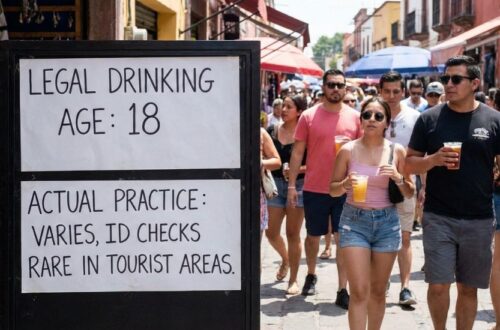
For example, travelers researching alcohol laws in different destinations can also compare these rules with the legal drinking age in Mexico, where the minimum legal age is generally 18.
What Should Travelers Check Before Drinking Abroad?
Before your trip, check:
- the legal age for buying alcohol
- the age for being served in bars and restaurants
- whether beer and wine have different rules
- whether spirits have a higher age limit
- whether private and public consumption are treated differently
- what identification is accepted
These details can matter more than the headline drinking-age number.
Youngest Drinking Age vs. U.S. Drinking Age
The comparison with the United States is one reason this topic gets so much attention.
The U.S. is widely associated with a minimum drinking age of 21, while several European countries have lower age limits for certain alcoholic drinks. That doesn’t mean every European country allows young people to freely drink all types of alcohol.
The difference is mainly that alcohol laws are structured differently from country to country.
Frequently Asked Questions
What is the youngest drinking age in the world?
There is no single worldwide number because countries regulate drinking, purchasing and serving alcohol differently. Some countries have no single minimum age for every situation, while others set different ages for different beverages.
What country has the youngest drinking age?
Germany is frequently mentioned because its law allows an exception for beer and wine consumption for young people accompanied by a person with parental responsibility. However, calling Germany’s drinking age simply “14” leaves out important details.
Can you drink at 14 in Germany?
Germany’s law does not simply establish a general drinking age of 14. Its rules distinguish between types of alcohol and parental supervision. Beer and wine are generally restricted for people under 16 in public, with an exception when accompanied by a person with parental responsibility. Spirits remain restricted to people under 18.
What is the youngest legal age to buy alcohol?
That depends on the country, the type of alcohol and whether the purchase is on-premise or off-premise. WHO tracks these categories separately rather than treating them as one worldwide drinking age.
Is the drinking age 16 in Europe?
Not everywhere. Some European countries have age limits of 16 for certain alcoholic drinks, while others use 18 or different rules depending on the beverage and setting.
Conclusion
So, where is the youngest drinking age in the world?
There isn’t a single country that can be given a simple answer without explaining what “drinking age” means. Germany is often mentioned because its law has a parental-supervision exception for beer and wine, while many European countries allow certain alcoholic beverages at 16.
The important thing for travelers is to look beyond one number. Buying, being served, possessing and consuming alcohol can all have different age rules. Checking the current local law before traveling is the safest way to avoid confusion.