
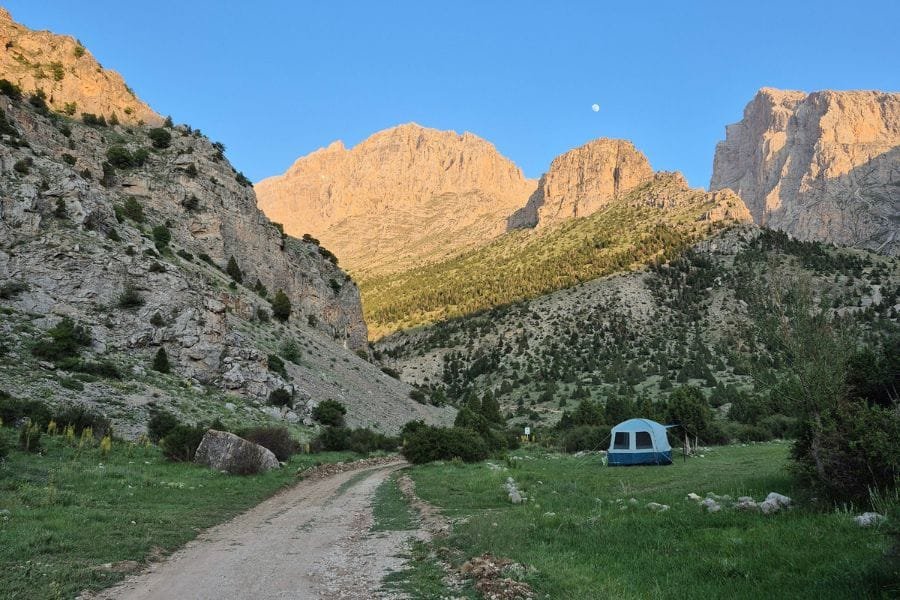
Guadalupe Mountains gives special kind of experience for a national park. Located in far West Texas, Guadalupe Mountains has rugged mountain trails, desert landscapes, high-level forests, and the highest point in Texas, with an elevation of 8,751 feet (2,667 m), more than 3,000 feet above the surrounding Chihuahuan Desert.
Conditions, as well as seasons, can change quickly, so the park is open for visitors all year round. Visitors need to come prepared because there are no gas stations, public transportation, hotels, or even restaurants. If you plan to hike, carry plenty of water and check the weather.
This article covers everything you need to know before travelling to Guadalupe Mountains, whether you want to climb Guadalupe Peak, explore McKittrick Canyon, walk through the white sands of the Salt Basin Dunes, or spend a quiet night camping beneath the desert sky.
Where Is The Guadalupe Mountains National Park?
Guadalupe Mountains National Park is in far West Texas, close to the New Mexico state line. The main park entrance and Pine Springs Visitor Center are located along U.S. Highway 62/180.
The park is about 110 miles east of El Paso, 56 miles southwest of Carlsbad, New Mexico, and approximately 62 miles north of Van Horn, Texas. Visitors traveling to the northern Dog Canyon district use New Mexico State Road 137.
Because of its remote location, driving is the most practical way to reach the park. There is no public transportation or shuttle service inside Guadalupe Mountains National Park.
Why Visit Guadalupe Mountains National Park?
The main attraction is the landscape itself. The mountains rise dramatically from the desert, creating several distinct environments within a relatively compact area.
Guadalupe Mountains National Park covers more than 86,000 acres and protects part of an ancient Permian fossil reef. Over millions of years, geological forces buried, uplifted, and exposed the reef, leaving behind the limestone formations visible today.
The park also contains more than 80 miles of hiking trails. These range from relatively short walks to demanding backcountry routes through high-elevation forests and steep mountain terrain.
One of the most surprising features is the variety of plant life. More than 1,000 plant species have been identified in the park, with habitats ranging from Chihuahuan Desert vegetation to mountain forests containing Douglas fir, ponderosa pine, and southwestern white pine.
Best Things to Do in Guadalupe Mountains
Hike to Guadalupe Peak
For many visitors, climbing Guadalupe Peak is the highlight of a trip.
At 8,751 feet, Guadalupe Peak is the highest point in Texas. The round-trip hike is about 8.4 miles and involves approximately 3,000 feet of elevation gain. The National Park Service rates it very strenuous and estimates six to eight hours for the hike.
The trail begins at Pine Springs and climbs steadily through switchbacks. The first section is particularly steep. Higher up, the surroundings change as the trail reaches forested areas and eventually opens toward the summit.
The views are the reward. On a clear day, hikers can see across the surrounding mountains and desert.
This is not a trail to underestimate. Carry plenty of water, wear sturdy footwear, start early, and allow enough time to complete the hike before dark. If you are attempting the trail around sunrise or sunset, bring a headlamp or flashlight.
Weekend parking can fill early, so arriving at the trailhead early is especially useful.
Explore McKittrick Canyon
McKittrick Canyon is one of the most distinctive areas in the park. Its sheltered environment supports vegetation that looks surprisingly different from the surrounding desert.
A relatively popular option is the hike toward Pratt Cabin.
From the McKittrick Canyon Trailhead, the cabin is about 2.3 miles away, making the round trip approximately 4.8 miles. Continuing farther takes you toward the Grotto, about 7 miles round trip from the trailhead.
The canyon changes as you walk. The trail passes through desert vegetation before reaching greener areas, springs, trees, and impressive canyon walls.
If you enjoy exploring scenic trails and natural landscapes, you might also like discovering the outdoor attractions around Rockland, Maine.
The loop is about 0.9 miles and has approximately 216 feet of elevation gain. It usually takes less than an hour and offers a quick introduction to the canyon’s plants, geology, and small water-dependent habitats.
It is a useful choice for visitors with limited time.
Visit the Salt Basin Dunes
The Salt Basin Dunes offer one of the park’s most unusual landscapes.
Instead of the dark limestone mountains you may expect, you will find a field of bright-white gypsum dunes on the western side of the park. The dunes cover nearly 2,000 acres and vary considerably in size.
The trail from the Salt Basin Dunes Trailhead to the dunes is about 1.5 miles one way. The route is relatively flat, but there is little shade.
That last point matters. The dunes can become dangerously hot during summer, so carry plenty of water and avoid hiking during the hottest part of the day.
The contrast between the white gypsum, desert floor, and dark mountain escarpment also makes this an excellent place for landscape photography.
Hike to Devil’s Hall
Devil’s Hall is a narrow formation in Pine Springs Canyon.
The route from the Pine Springs Trailhead to Devil’s Hall is about 2.1 miles one way. The first section follows the wash, while the latter part requires route finding, rock scrambling, and careful movement over uneven surfaces.
This is not the best choice after rain. The National Park Service advises visitors not to attempt the route during wet or rainy conditions because the rocks can become slippery and conditions in the wash can change.
Visit Frijole Ranch
Guadalupe Mountains National Park is not only about hiking.
At Frijole Ranch, visitors can learn about the human history of the Guadalupe Mountains. The historic ranch complex includes the old ranch headquarters, a small schoolhouse, and a spring house.
The area provides an interesting look at Native American history, ranching, and life in this isolated part of West Texas.
Frijole Ranch is also the starting point for several hiking routes, including the Smith Spring Loop.
Hike the Smith Spring Loop
The Smith Spring Loop is a good option if you want a shorter hike with scenery and water.
The loop is 2.3 miles long with about 402 feet of elevation change. It generally takes one to two hours and is rated easy to moderate. The trail passes Manzanita Spring before reaching Smith Spring, a shady oasis near the base of the mountains.
The springs also attract birds and other wildlife, making this a good area for birdwatching.
Walk the Pinery Trail
For a very short and accessible walk, consider the Pinery Trail near the Pine Springs Visitor Center.
The round trip is about 0.75 miles, and the paved trail leads to the remains of the historic Pinery Station. The site was once associated with the Butterfield Overland Mail Route.
The trail is rated easy and is wheelchair accessible.
It is also one of the few places in the park where leashed pets are permitted.
Guadalupe Mountains National Park Entrance Fees
The standard entrance fee is estimated $10 per person for visitors age 16 and older. Children under 16 do not need an entrance pass. Federal recreation passes, including the America the Beautiful Pass, are accepted.
The Pine Springs Visitor Center accepts credit card payments during its operating hours, and self-pay stations are available at trailheads.
As of 2026, developed camping at Pine Springs and Dog Canyon costs $20 per site per night. Senior and Access Pass holders receive a reduced camping rate of $10 per site per night.
Always check the National Park Service website before your trip because fees and operating arrangements can change.
Where to Stay Near Guadalupe Mountains
There are no hotels or lodges inside Guadalupe Mountains National Park.
For visitors who want to camp, the park has developed campgrounds at Pine Springs and Dog Canyon. There is also a horse oriented campground facility at Frijole.
Pine Springs Campground
Pine Springs is the most convenient campground for visitors planning to hike Guadalupe Peak because it is close to the Pine Springs Trailhead.
The campground has primitive sites, potable water, restrooms, and picnic tables. There are no showers. Individual sites accommodate up to six people and two tents.
Dog Canyon Campground
Dog Canyon is in the northern part of the park and has a cooler, more sheltered setting. It is approximately a two-hour drive from Pine Springs.
The campground is open year-round and offers tent and RV sites. The area is protected by steep canyon walls, making it somewhat more sheltered from the strong winds that can affect other parts of the park.
Best Time to Visit Guadalupe Mountains
Spring and fall are generally among the most pleasant seasons for visiting Guadalupe Mountains National Park. They are also among the park’s busier periods.
Spring
Spring usually brings comfortable temperatures, although weather can change quickly. It is a good season for hiking before the hottest part of the year arrives.
Summer
Summer can be extremely hot in the lower desert areas. June through August are the hottest months, and the park’s rainy season can bring thunderstorms and localized flash flooding.
If visiting during summer, start hikes early and carry plenty of water. The National Park Service recommends at least one gallon of water per person per day for hiking in the desert.
Fall
Fall offers generally pleasant hiking conditions and is a popular time to visit. Temperatures can change considerably between the desert floor and the higher elevations.
Winter
Winter can be beautiful, but visitors need to take the mountain weather seriously. Snow, ice, freezing fog, and strong winds can occur at higher elevations. November through March is the park’s windy season, and gusts can reach 50 to 80 mph.
What to Pack for Guadalupe Mountains
A successful visit depends heavily on preparation.
Bring:
Plenty of drinking water
A sturdy pair of hiking shoes or boots
Sun protection
A wide-brimmed hat
Sunscreen
Extra food and snacks
A detailed trail map
Compass or GPS
Headlamp or flashlight
First-aid supplies
Extra layers of clothing
Rain protection when storms are possible
Trekking poles if you prefer additional stability
The National Park Service recommends carrying the Ten Essentials plus an additional item for wilderness travel.
Do not depend on your phone alone for navigation. Cell service may be unreliable, and some trails require route-finding skills.
Guadalupe Mountains Hiking Safety Tips
The Guadalupe Mountains are beautiful, but they are not a casual walking destination.
Carry enough water
There is no water available along the park’s trails or in the wilderness. The park recommends carrying at least one gallon of water per person per day.
Check the weather before hiking
Before starting your hike, check the latest weather forecasts from the National Weather Service.
Conditions can change quickly, especially at higher elevations. Summer thunderstorms can arrive quickly, while winter and spring can bring strong winds.
If lightning appears, move away from exposed ridges, hilltops, and open areas.
Take wind seriously
Strong winds are a major consideration in Guadalupe Mountains National Park.
The National Park Service notes that walking becomes difficult around 40 mph winds. At 50 mph, conditions can become dangerous even for experienced hikers, and visitors are advised to turn back when winds exceed 55 mph.
Do not underestimate the elevation
The park ranges from roughly 3,600 feet to 8,751 feet in elevation. Higher areas can be considerably cooler and windier than the desert below.
Leave pets behind for most hikes
Pets are prohibited on almost all park trails. They are permitted in developed areas such as roads, parking areas, campgrounds, and certain limited trails.
If you are planning a hiking-focused trip, leaving your pet at home will make planning much easer
Is Guadalupe Mountains Worth Visiting?
Guadalupe Mountains National Park is especially worthwhile for travelers who enjoy hiking, geology, wildlife, photography, camping, and quiet outdoor destinations.
It requires more preparation than a park with restaurants, paved scenic routes, frequent visitor facilities, and nearby hotels.
You can spend a morning climbing toward the highest point in Texas, walk through a canyon containing surprisingly lush vegetation in the afternoon, and then watch the desert light change across the mountains before nightfall.
The key is to plan around the environment. Bring your own supplies, check the weather, choose trails that match your ability, and give yourself enough time. With that preparation, Guadalupe Mountains can be one of the most rewarding places to explore in West Texas.
Frequently Asked Questions
What is Guadalupe Mountains National Park known for?
It is best known for Guadalupe Peak, the highest point in Texas, as well as its rugged mountains, McKittrick Canyon, ancient Permian reef geology, high elevation forests, and Salt Basin Dunes.
How difficult is the Guadalupe Peak hike?
The Guadalupe Peak hike is very strenuous. It is about 8.4 miles round trip with approximately 3,000 feet of elevation gain and generally takes six to eight hours.
Can you visit Guadalupe Mountains without hiking?
Yes. Visitors can explore the Pinery Trail, Frijole Ranch, viewpoints, picnic areas, and other accessible areas. However, hiking is one of the main ways to experience the park’s mountains and canyons.
Is there lodging inside Guadalupe Mountains National Park?
There are no hotels or lodges inside the park. Visitors can camp at developed campgrounds such as Pine Springs and Dog Canyon, or stay in nearby communities outside the park.
Are dogs allowed in Guadalupe Mountains National Park?
Dogs are allowed in certain developed areas, roads, campgrounds, and a very limited number of trails. They are prohibited on almost all park trails and in the backcountry.
What is the best time to visit Guadalupe Mountains?
Spring and fall are generally comfortable seasons for hiking. Summer brings high heat and thunderstorms, while winter can bring freezing temperatures, snow, ice, and strong winds at higher elevations. Always check current conditions before your trip.





One comment on “Guadalupe Mountains National Park: A Complete Travel Guide”