
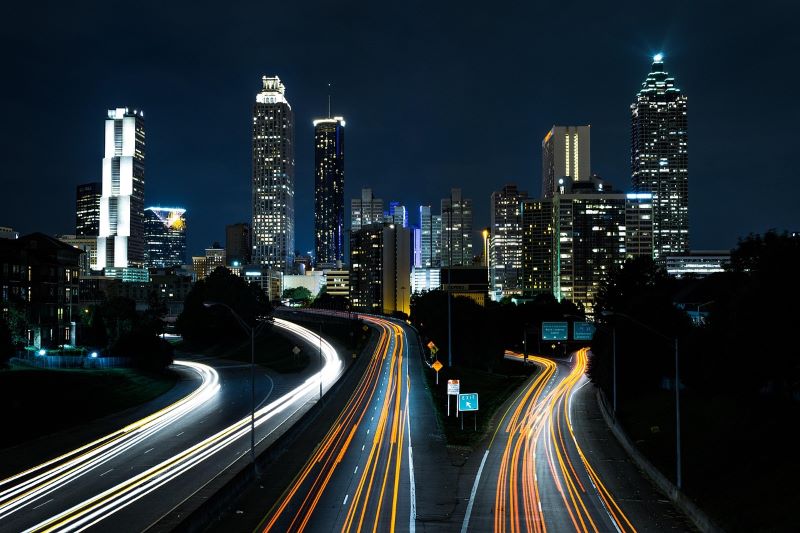
I remember the day I first came across the question, “How does light travel so fast?” It wasn’t just curiosity; I actually purchased a science starter kit from an online store that included a prism, LED light sources, and a small booklet explaining light refraction.
I bought it from Yeelight’s official store, because they had a detailed article and real user reviews that convinced me this wasn’t just a simple toy; it was something to deepen my understanding.
The main reason behind buying it was simple: I wanted to see with my own eyes how light bends, reflects, and moves so quickly compared to sound. Instead of just reading theory, I wanted a hands-on experience. That personal touch made the learning more exciting and real.
The Promise of Finding an Answer
As I opened the kit, I vowed to myself to do or not to do something, and that is the fact that I will at last know how light can seem to be almost magic. Why is the speed of light so high? Why does light move faster than sound? These are not trivia, however, about the science of the world around us, they are related to the functioning of our universe. Just like exploring new perspectives when you travel and discover things to see in Istanbul, learning about the speed of light opens up hidden wonders.
After reading this article, you will not only gain the knowledge of the scientific aspect of the speed of light, but also realize that there were real individuals who discovered it bit by bit, just like me.
My Research: Why Does Light Travel So Fast?
After setting up the prism and LED, I spent hours watching how beams of light split into different colors. That led me to do deeper research. Here’s what I found, supported by trusted sources like Prof. Matt Strassler’s blog:
In a vacuum, light propagates at a speed of approximately 186,282 miles an hour (299,792 kilometers per second). That is almost 671 million miles per hour, a phenomenal speed compared to sound, which only moves at 767mph.
But why does it travel so fast?
It is answered in the nature of light. Light consists of photons, the tiny packets of energy and which have no rest mass. Since photons have no mass, they do not necessarily have to make any effort to penetrate space as actual objects do; they travel at the speed given to them by physics laws. That is why, on asking how light travels so fast in mph, the mind-boggling figure is apparent.
The Story Behind My Curiosity
During the process of working with the kit, I explained to my younger cousin my experiment. He asked the question: Could we ever travel 100 percent the speed of light? That was a question that sent me still further. Physics dictates that human beings or any object with mass cannot reach a 100 percent speed of light since the faster we move, the more energy it demands.
Nevertheless, scientists are investigating the possibility of human beings at least reaching a fraction of such a speed. Are we moving at 1 percent of the speed of light? The answer is yes, but only with the use of subatomic particles in particle accelerators. In the case of spacecraft, we are a long way off and only traveling thousands of miles per hour as opposed to millions. Just as travelers compare different options before flying and wonder is Frontier a good airline, scientists also weigh possibilities before exploring new frontiers of speed.
This made me see things clearly: light is not only fast, it is the speed limit throughout the universe. All the rest have a hard time even trying.
Pros and Cons of My Purchase (and Learning Light’s Speed)
Like any product I’ve purchased, my light experiment kit had pros and cons:
Pros
- Hands-on learning: I understood concepts far better than reading theory alone.
- Visual proof: Watching light bend and split into colors made it real.
- Value for money: The kit was affordable and gave me hours of learning.
Cons
- Not professional-grade: It’s perfect for beginners but limited for deep physics experiments.
- Dependent on setup: Needed a dark room to see effects clearly.
Despite these minor drawbacks, it served its purpose. I got closer to answering the age-old question of how light travels so fast.
Why Does Light Travel Faster Than Sound?
It is one of the most common daily experiences to see lightning and then hear thunder later. Light reaches us just about immediately, and sound takes time to travel through the air. This is because sound requires a medium (air, water, or solid material) to travel, whereas light does not require a medium to travel even in a vacuum.
This is not an academic difference but rather a practical one. It explains why fiber optic internet is so fast, solar power reaches us in minutes, and why communication satellites depend on the transmission of light speed. Similarly, exploring how far and fast we can go has always fascinated humans, just like when people seek overseas adventure travel to discover new horizons.
Is It Possible to Travel at Light Speed?
The question that kept coming to mind after my experiment was, can we one day ride light beams through the galaxy? Regrettably, based on the theory of relativity by Einstein, no object can travel fast than the speed of light. Nevertheless, that has not prevented scientists from dreaming.
Other projects, such as Breakthrough Starshot, hope to launch viable spacecraft at a tiny fraction of the speed of light, driven by laser beams. Although it would not travel at 100 percent speed of light, even 10 percent of this would cut interstellar travel by thousands of years and only decades.
How Does Light Travel So Fast in MPH?
It is even more impressive when put in numbers. The speed of light is approximately 671 million mph. In perspective, a plane traveling at 600 mph would take 1,000 years to travel the same distance that light travels in a single second. This was something that shocked my mind when I was playing around with my kit. It was not merely a number but a portal to the knowledge of time, space, and the universe itself.
Final Experience and Reflection
Looking back, buying that simple science kit was one of the best learning decisions I made. It transformed a random question, “How does light travel so fast?” into a journey of exploration, research, and deeper curiosity.
I realized that sometimes learning isn’t about having all the answers, it’s about seeing the questions differently. That small experiment, combined with research from resources like StyleVarient and Prof. Matt Strassler’s insights, helped me build real knowledge.
Conclusion
The speed of light is not a number but rather the structure of the universe we live in. My personal purchase, practical experiments, and comprehensive research helped me not only to discover the reasons why light is moving this fast but also to comprehend the reasons why it is a puzzle that puts scientists all over the world to work. My recommendation: go and see it, as there are times when you cannot help but feel that light in action, and it will not feel as much like a science fiction movie but more like the way things are.
FAQs
Q1: Why is the speed of light so fast?
Because photons have no mass, they move at the maximum speed allowed by the universe, about 186,282 miles per second.
Q2: Have we reached 1% of the speed of light?
Yes, but only in particle accelerators with subatomic particles. Human technology is far from achieving this with spacecraft.
Q3: Why does light travel faster than sound?
Sound requires a medium like air, while light can travel in a vacuum without resistance. That’s why lightning reaches your eyes before thunder reaches your ears.